Hearing a grinding noise every time you press the brake pedal is never something to ignore. Whether the sound is loud, metallic, or only happens occasionally, grinding brakes usually indicate that part of your braking system needs immediate attention. Waiting too long can turn a simple brake service into a much more expensive repair.
If you’re wondering, «Why are my brakes grinding when I stop?», the cause could be worn brake pads, damaged rotors, debris trapped in the brakes, or even a failing brake caliper. Identifying the problem early helps keep your vehicle safe while preventing further damage to your braking system.
Here’s everything you need to know about why your brakes grind when stopping, the most common causes, and how to fix the issue before it becomes a serious safety concern.
Why Do Brakes Make a Grinding Noise?
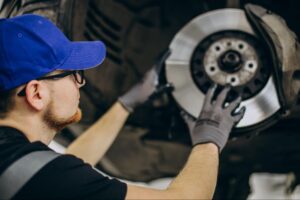
Your braking system works by pressing the brake pads against the brake rotors, creating friction that slows your vehicle.
When every component is in good condition, braking should be smooth and relatively quiet. If metal components begin rubbing together or debris interferes with the braking surfaces, you’ll often hear a grinding or scraping sound.
Because your brakes are one of your vehicle’s most important safety systems, unusual noises should always be inspected promptly.
5 Common Causes of Grinding Brakes
Several problems can cause your brakes to grind when stopping.
1. Worn-Out Brake Pads
The most common cause of grinding brakes is completely worn brake pads.
Brake pads contain friction material that gradually wears down with normal use. Once this material is gone, the metal backing plate contacts the brake rotor directly, creating a harsh grinding noise.
Common warning signs include:
- Loud metal-on-metal grinding
- Reduced braking performance
- Longer stopping distances
- Brake warning light
- Visible thin brake pads
Replacing worn brake pads early can prevent expensive rotor damage.
2. Damaged or Worn Brake Rotors
Brake rotors can become damaged from excessive heat, corrosion, or prolonged driving with worn brake pads.
A damaged rotor creates uneven contact with the brake pads, leading to vibrations and grinding noises.
Signs of rotor problems include:
- Steering wheel vibration while braking
- Pulsating brake pedal
- Grooved rotor surface
- Uneven braking performance
- Grinding or scraping sounds
Depending on their condition, rotors may need resurfacing or replacement.
3. Debris Trapped Between the Brake Pad and Rotor
Sometimes the problem isn’t mechanical failure at all.
Small rocks, road debris, or rust buildup can become trapped between the brake pad and rotor, producing a temporary grinding sound.
This often occurs after:
- Driving on gravel roads
- Off-road driving
- Heavy rain
- Long periods of vehicle storage
If the noise persists after several brake applications, the braking system should be inspected.
4. Sticking Brake Caliper
Brake calipers apply pressure to the brake pads during braking.
If a caliper sticks, it may continue pressing the brake pad against the rotor even after you release the brake pedal.
Symptoms may include:
- Grinding noise
- Vehicle pulling to one side
- Burning smell
- Uneven brake pad wear
- Excessive heat from one wheel
A sticking caliper should be repaired immediately to prevent additional brake damage.
5. Rust or Corrosion on Brake Components
Surface rust commonly develops on brake rotors after a vehicle sits overnight or during humid weather.
In most cases, light rust disappears after a few normal stops.
However, excessive corrosion can damage the braking surface and create grinding noises.
Vehicles that are driven infrequently are especially prone to brake corrosion.
Other Possible Causes
Although these are the most common reasons for grinding brakes, other issues may also contribute, including:
- Loose brake hardware
- Worn wheel bearings
- Improper brake pad installation
- Damaged dust shield contacting the rotor
- Faulty brake caliper hardware
- ABS component issues
A complete brake inspection is the best way to identify the exact cause.
Is It Safe to Drive With Grinding Brakes?
No.
Grinding brakes usually indicate that the braking system has already sustained wear or damage.
Continuing to drive may result in:
- Increased stopping distances
- Rotor damage
- Brake caliper damage
- Brake failure
- Higher repair costs
If you hear grinding noises while braking, schedule a brake inspection as soon as possible.
How Mechanics Diagnose Grinding Brakes
A professional brake inspection typically includes checking:
- Brake pad thickness
- Brake rotor condition
- Brake caliper operation
- Brake hardware
- Brake fluid level
- Wheel bearings
- Dust shields
- Brake lines and hoses
Proper diagnosis ensures that every damaged component is repaired before it affects overall braking performance.
How to Prevent Grinding Brakes
Routine brake maintenance is the best way to prevent expensive brake repairs.
Follow these preventive maintenance tips:
- Have your brakes inspected during routine service.
- Replace brake pads before they wear completely.
- Inspect brake rotors whenever brake pads are replaced.
- Flush brake fluid according to the manufacturer’s recommendations.
- Avoid aggressive braking whenever possible.
- Address unusual brake noises immediately.
Preventive maintenance keeps your braking system performing safely while extending the life of its components.
Frequently Asked Questions
Why do my brakes grind only when I stop?
Grinding that occurs only during braking is most commonly caused by worn brake pads, damaged rotors, or debris caught between the brake pad and rotor.
Can I keep driving if my brakes are grinding?
It’s not recommended. Grinding usually indicates metal-to-metal contact or another brake system problem that can quickly worsen and reduce braking performance.
Will replacing brake pads stop the grinding?
If worn brake pads are the only problem, replacing them may eliminate the noise. However, if the brake rotors have also been damaged, they may need resurfacing or replacement as well.
Why do my brakes grind after sitting overnight?
Light surface rust on the brake rotors can create a temporary grinding or scraping noise during the first few stops. If the noise continues after driving, the brakes should be inspected.
How often should brake pads be replaced?
Brake pad lifespan varies depending on driving habits, vehicle weight, and pad material. Most brake pads last between 25,000 and 70,000 miles, but regular inspections are the best way to determine when replacement is needed.
If you’re asking, «Why are my brakes grinding when I stop?», don’t ignore the warning signs. Whether the problem is worn brake pads, damaged rotors, a sticking caliper, trapped debris, or corrosion, addressing the issue early helps restore safe braking performance and prevents more expensive repairs. Regular brake inspections and timely maintenance are the best ways to keep your vehicle stopping safely and reliably.
At Express Auto Care, drivers can access fast, professional automotive maintenance and repair services designed to help keep vehicles performing efficiently. Their service offerings include oil changes, brake replacement, transmission service, radiator flushes, serpentine belt inspections, A/C service, fuel system cleaning, and more.
Taking care of your vehicle today can help you avoid unexpected breakdowns tomorrow.