Your vehicle’s braking system is one of the most important safety components on the road, and brake pads play a major role in helping your car stop safely and efficiently. Over time, brake pads naturally wear down due to heat and friction, reducing their effectiveness and potentially putting your safety at risk.
Recognizing the warning signs early can help prevent damage to other brake components and avoid costly repairs. In this guide, you’ll learn the 5 most common signs you need brake pads replacement soon and why timely brake maintenance matters.
Why Brake Pads Are Important
Brake pads create the friction necessary to slow down or stop your vehicle. When you press the brake pedal, the brake caliper pushes the pads against the brake rotor, generating the force needed to stop the wheels.
Because brake pads experience constant friction and heat, they gradually wear down with normal driving.
Worn brake pads can affect:
- Stopping distance
- Braking performance
- Vehicle safety
- Rotor condition
- Overall driving control
Routine inspections help ensure your braking system remains safe and responsive.
1. Squeaking or Squealing Noises
One of the earliest warning signs of worn brake pads is a high-pitched squealing sound when braking.
Many brake pads include a built-in wear indicator that creates noise once the pads become too thin.
Squealing noises may indicate:
- Brake pad wear
- Dust buildup
- Glazed brake pads
- Moisture on the rotors
If the noise becomes consistent, it’s important to inspect the braking system soon.
2. Grinding Sounds While Braking
Grinding noises are usually more serious than squealing.
This often means the brake pads have worn down completely, causing metal-to-metal contact between the caliper and rotor.
Grinding may lead to:
- Rotor damage
- Reduced braking efficiency
- Increased repair costs
- Unsafe driving conditions
Ignoring grinding noises can result in expensive brake system repairs.
3. Longer Stopping Distances
If your vehicle takes longer to stop than usual, worn brake pads may be reducing braking performance.
You may notice:
- Delayed stopping response
- Reduced brake sensitivity
- Needing to press the pedal harder
Longer stopping distances increase accident risk, especially in heavy traffic or emergency situations.
4. Vibrations When Braking
A vibrating or pulsating brake pedal can indicate uneven brake pad wear or rotor issues.
Common causes include:
- Warped brake rotors
- Uneven pad contact
- Excessive heat buildup
Brake vibrations should never be ignored, as they can affect overall braking stability and control.
5. Thin Brake Pads
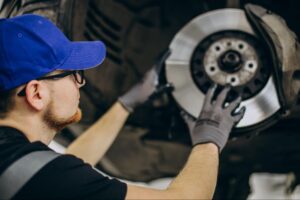
A visual inspection is one of the easiest ways to identify worn brake pads.
Most brake pads should have at least:
- 1/4 inch (about 6 mm) of material remaining
If the pads appear extremely thin, replacement may be necessary soon.
Some vehicles also include dashboard brake warning indicators that activate when brake service is needed.
How Long Do Brake Pads Last?
Brake pad lifespan depends on several factors, including:
- Driving habits
- Traffic conditions
- Vehicle weight
- Brake pad material
- Climate and terrain
On average, brake pads may last between:
- 30,000 to 70,000 miles
Frequent stop-and-go driving can accelerate wear significantly.
What Causes Brake Pads to Wear Faster?
Several factors may shorten brake pad lifespan.
Aggressive Braking
Hard braking generates additional heat and friction.
Heavy Traffic
Constant braking in city traffic increases wear.
Driving in Mountainous Areas
Steep roads place extra stress on braking systems.
Low-Quality Brake Pads
Cheaper materials may wear out more quickly.
Why Timely Brake Pad Replacement Matters
Replacing brake pads early helps protect other brake components and maintain safe stopping performance.
Timely replacement may help prevent:
- Rotor damage
- Brake fluid overheating
- Reduced vehicle control
- Increased repair expenses
Brake maintenance is far less expensive than repairing a severely damaged braking system.
Brake Pads vs Brake Rotors
Brake pads and rotors work together but serve different purposes.
Brake Pads
Create friction against the rotor to stop the vehicle.
Brake Rotors
Metal discs attached to the wheels that the pads press against during braking.
Worn brake pads can eventually damage the rotors if not replaced promptly.
Tips to Extend Brake Pad Life
You can help reduce brake wear by:
- Avoiding aggressive braking
- Maintaining safe following distance
- Reducing unnecessary braking
- Scheduling regular brake inspections
- Using quality brake components
Smooth driving habits often lead to longer-lasting brake pads.
Frequently Asked Questions
Can I drive with worn brake pads?
Driving with worn brake pads is unsafe and may increase stopping distances or damage other brake components.
How often should brake pads be inspected?
Many experts recommend inspecting brake pads during routine tire rotations or oil changes.
What happens if brake pads wear out completely?
Completely worn brake pads may cause metal-to-metal contact, damaging the rotors and reducing braking performance.
Do front brake pads wear faster than rear pads?
In many vehicles, front brake pads wear faster because the front brakes handle most of the stopping force.
Recognizing the early warning signs of worn brake pads can help you maintain safe braking performance and avoid costly repairs. Squealing noises, grinding sounds, vibrations, and longer stopping distances are all indicators that brake service may be needed soon.
Routine brake inspections and timely brake pad replacement help protect your vehicle, improve safety, and ensure reliable stopping power in everyday driving conditions.
Keep Your Vehicle Running at Its Best
Regular maintenance is the key to preventing costly repairs, improving performance, and extending the life of your vehicle. Whether you need an oil change, brake service, transmission maintenance, air conditioning inspection, or preventative care, staying ahead of small issues can help keep your car reliable and safe on the road.
At Express Auto Care, drivers can access fast, professional automotive maintenance and repair services designed to help keep vehicles performing efficiently. Their service offerings include oil changes, brake replacement, transmission service, radiator flushes, serpentine belt inspections, A/C service, fuel system cleaning, and more.
Taking care of your vehicle today can help you avoid unexpected breakdowns tomorrow.